|
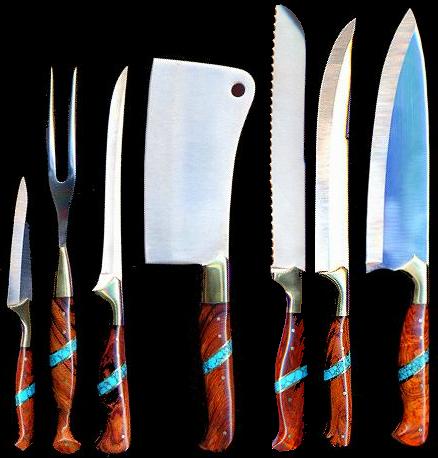
One of the true tropical rosewoods, Cocobolo is a very beautiful wood, ranging from a beautiful rich dark brick red, to reddish or dark brown, with a figuring of da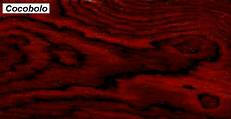 rker
irregular traces weaving through the wood. It is fine textured and oily
in look and feel. The wood has excellent working characteristics and
the natural oils give the wood a natural luster. Cocobolo is highly
durable and strong, but, because of its scarcity and high value, it is
used for its rare beauty rather than its strength or durability. Only
small amounts of this prized wood reach the world market, and usually
in pieces of small dimension. Cocobolo is highly favored for fine
furniture and cabinetry, fine inlay work, brush backs, knife handles,
musical instruments, decorative and figured veneers, bowls, jewelry
boxes, and other expensive specialty items. Because of its great beauty and high value, Cocobolo has been heavily
exploited and is now in danger of extinction outside of national parks and preserves. rker
irregular traces weaving through the wood. It is fine textured and oily
in look and feel. The wood has excellent working characteristics and
the natural oils give the wood a natural luster. Cocobolo is highly
durable and strong, but, because of its scarcity and high value, it is
used for its rare beauty rather than its strength or durability. Only
small amounts of this prized wood reach the world market, and usually
in pieces of small dimension. Cocobolo is highly favored for fine
furniture and cabinetry, fine inlay work, brush backs, knife handles,
musical instruments, decorative and figured veneers, bowls, jewelry
boxes, and other expensive specialty items. Because of its great beauty and high value, Cocobolo has been heavily
exploited and is now in danger of extinction outside of national parks and preserves.
Turquoise is a valuable mineral and is possibly the most valuable, non-transparent mineral in the jewelry trade. It has been mined for eons since at least 6000 BC.
by early Egyptians. Its history also includes beautiful ornamental
creations by Native Americans and Persians. Its popularity is still
quite strong today. Although crystals of any size are rare, some small
crystals have been found in Virginia and elsewhere. Most specimens are
cryptocrystalline, meaning that the crystals could only be seen by a
microscope. The finest turquoise comes from Iran but is challenged by
some southwestern United States specimens. Turquoise is often imitated
by "fakes", such as the mineral chrysocolla, and poorer turquoise
specimens are often dyed or color stabilized with coatings of various
resins. The name comes from a french word which means stone of Turkey,
from where Persian material passed on its way to Europe.
the jewelry trade. It has been mined for eons since at least 6000 BC.
by early Egyptians. Its history also includes beautiful ornamental
creations by Native Americans and Persians. Its popularity is still
quite strong today. Although crystals of any size are rare, some small
crystals have been found in Virginia and elsewhere. Most specimens are
cryptocrystalline, meaning that the crystals could only be seen by a
microscope. The finest turquoise comes from Iran but is challenged by
some southwestern United States specimens. Turquoise is often imitated
by "fakes", such as the mineral chrysocolla, and poorer turquoise
specimens are often dyed or color stabilized with coatings of various
resins. The name comes from a french word which means stone of Turkey,
from where Persian material passed on its way to Europe. |